

Complete Umrah Guide: How to Perform Umrah Step by Step
Planning your first Umrah this year? It's the best time to learn about the steps of Umrah and understand how to perform Umrah according to the Sunnah steps and rituals. Therefore, this Umrah guide is all about the steps of performing Umrah in detail with Umrah Dua's that every first-time pilgrim should go through. From physical and spiritual preparation steps to complete Umrah itinerary and performing the second Umrah, this Umrah guide covers everything in one place. So, let's read ahead to get prepared for such a sacred journey of your life and learn how to avoid common Umrah mistakes while enhancing the overall experience.
What Is Umrah? A Simple Overview
An Umrah is a sacred journey in Islam in which pilgrims visit the Kaabah and perform particular Umrah rituals in Haram. Though Umrah isn't an obligatory worship, it's a highly rewarding act that brings Muslims closer to Allah. At Cheap Umrah Packages, we help pilgrims in maximising their reward by facilitating them and guiding them about all steps of Umrah in detail. So, you can confirm your Umrah booking with our affordable deals to ensure complete guidance throughout the pilgrimage. In terms of Umrah steps, an Umrah comprises four major rituals including Ihram, Tawaf, Sa'i and Halq or Taqsir which takes a few hours to complete.
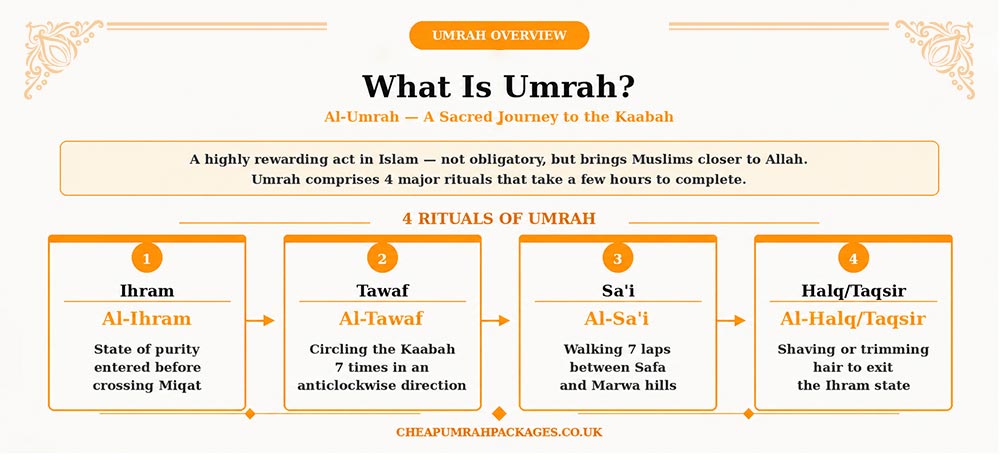
However, it's only possible when pilgrims know exactly how to perform Umrah step by step exactly according to the Sunnah. And if you have no such understanding, this Umrah guide is for you. So, let's understand each Umrah ritual.
Before You Travel: Umrah Preparation Checklist for UK Pilgrims
The entire Umrah journey becomes a lot easier when one gets prepared beforehand. Umrah preparation involves all the aspects of pilgrimage including physical, logistical and spiritual. Therefore, a complete Umrah checklist in this regard is quite helpful especially for first-time pilgrims. So, you should consider the following things to make Umrah preparation like a pro:
1. Essential Documents to Carry
The essential documents for an Umrah journey include a valid passport, an Umrah or a tourist visa, recent photographs, and a vaccination certificate for the Meningococcal Meningitis vaccine.
2. Ihram Clothing
Men need to buy two plain, white unstitched cloths as an Izar and a Rida. However, women can wear modest clothing as ihram garments or a simple abaya and head scarf.
3. Packing Essentials
Besides ihram clothing, pack a few pairs of routine-wearing clothes, comfortable footwear, toiletries, skincare products, medications, and cash in Riyals.
4. Setting Up the Nusuk App
Install Nusuk application in your mobile phone and create an account to connect your Umrah visa and passport before departure. You have to book a Rawdah permit through the Nusuk application, while everything else will be managed by our professionals at Cheap Umrah Packages.
5. Spiritual Preparation
Besides physical and logistical preparation, leveling up your spirituality is also important. For this, pilgrims should offer obligatory prayers on time, recite Quran daily, ask forgiveness and practice tolerance in routine life to adapt to the pilgrimage routine during your journey.
Step 1 — Entering the State of Ihram
Ihram is a spiritual state of purity that pilgrims enter to before crossing Miqat with a purpose of performing Umrah specifically. Entering the state of Ihram is the foremost ritual of Umrah without which the whole Umrah becomes invalid and unacceptable. And thus the step by step Umrah guide starts from understanding the concept of Miqat and the state of Ihram.
Understanding Miqat: Which One Do UK Pilgrims Cross?
Miqat is a geographical location particular in the context of Islam that pilgrims cannot cross without entering into the state of Ihram. And this Miqat point is different for pilgrims traveling from different directions to Makkah. For example, all of the Umrah flights from the UK cross Yalamlam or Qarn al-Manazil Miqat based on their routes. So, British pilgrims have to wear Ihram clothes at departure airport before boarding an Umrah flight and make niyyah of the Umrah journey to enter the Ihram state in the Plane before crossing Miqat point. Airlines also used to inform pilgrims at least 30 minutes before reaching the Miqat location yet making niyyah earlier is always a safe option.
Ihram State vs. Ihram Garments
Pilgrims especially first-time travelers think of entering Ihram the same as wearing Ihram clothes. But it's not true because wearing Ihram clothes is just a prerequisite of entering the ihram state but not the same exactly. On the other side, the Ihram state begins by making proper niyyah of an Umrah journey and reciting Talbiyah along with.
Making Niyyah for Umrah
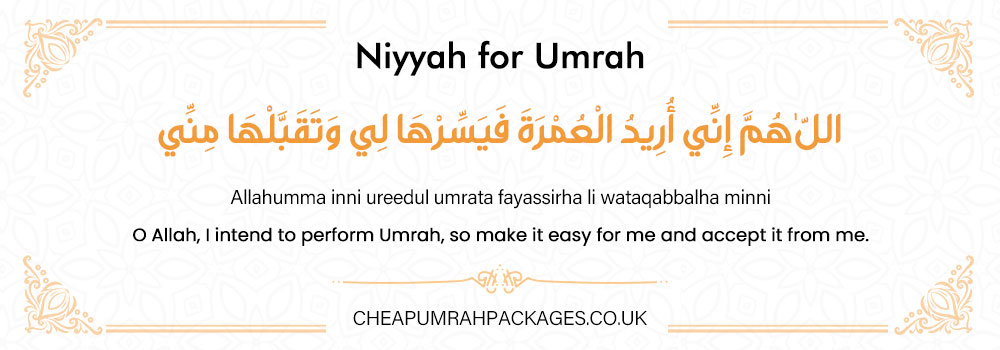
To enter the Ihram state, both men and women pilgrims have to make niyyah of the Umrah journey before crossing Miqat. Basically, niyyah is an acknowledgment that defines the purpose of your journey, and Umrah too. It's important to revive in your heart that you are going to perform Umrah for the sake of Allah. Here are the Arabic words to make niyyah but pilgrims can also make niyyah in their own words in the heart:
Arabic Niyyah:
اللّٰهُمَّ إِنِّي أُرِيدُ الْعُمْرَةَ فَيَسِّرْهَا لِي وَتَقَبَّلْهَا مِنِّي
Transliteration: Allahumma inni ureedul umrata fayassirha li wataqabbalha minni
Translation: O Allah, I intend to perform Umrah, so make it easy for me and accept it from me.
Arabic Text:
لَبَّيْكَ اللّٰهُمَّ عُمْرَةً
Transliteration: Labbaik Allahumma Umratan.
Translation: Here I am, O Allah, intending Umrah.
Reciting Talbiyah
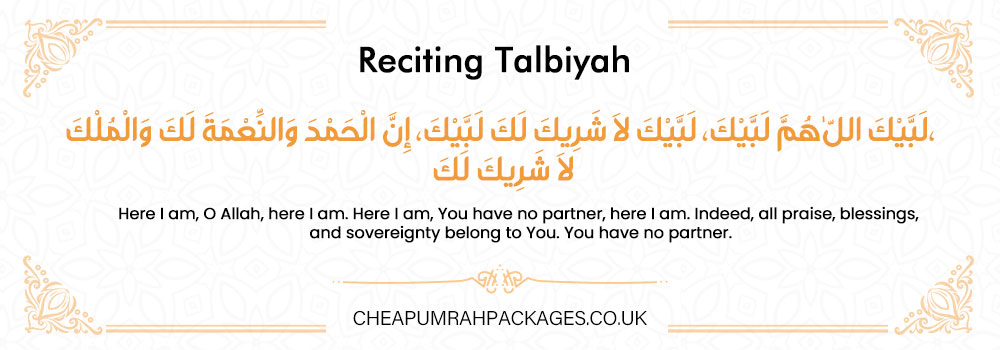
Reciting Talbiyah while making niyyah of an Umrah journey is an important part of the niyyah. Talbiyah is an acknowledgment of the oneness of Allah and the confirmation of your journey.
لَبَّيْكَ اللّٰهُمَّ لَبَّيْكَ، لَبَّيْكَ لَا شَرِيكَ لَكَ لَبَّيْكَ، إِنَّ الْحَمْدَ وَالنِّعْمَةَ لَكَ وَالْمُلْكَ، لَا شَرِيكَ لَكَ
Transliteration: Labbaik Allahumma labbaik, Labbaik la shareeka laka labbaik, Innal hamda wan ni'mata laka wal mulk, La shareeka lak.
Translation: Here I am, O Allah, here I am. Here I am, You have no partner, here I am. Indeed, all praise, blessings, and sovereignty belong to You. You have no partner.
Keep reciting Talbiyah throughout the journey until reaching Haram and seeing Kaabah for the first time.
Rules of Ihram: What Is Permitted and What Is Forbidden
The state of Ihram is a spiritual state with its own rules and prohibitions. So, pilgrims have to follow all such ihram rules from making niyyah for an Umrah journey to the moment of exiting the Ihram state by performing Halq or Taqsir. Knowing these ihram rules and restrictions is important since any mistake can invalidate the whole Umrah journey in the sight of Allah.
What Is Forbidden in the State of Ihram?
It's prohibited to cut hair or nails, use scented products, hunt animals, involvement in marital relations, cover head for men, cover face for women, and engaging in fighting or arguing in the state of Ihram.
What Is Permitted in the State of Ihram?
In contrast, it's permissible to take care of cleanliness and hygiene, use unscented products, change ihram clothes, eat and drink normally in the state of Ihram.
Step 2 — Performing Tawaf (Circling the Kaabah)
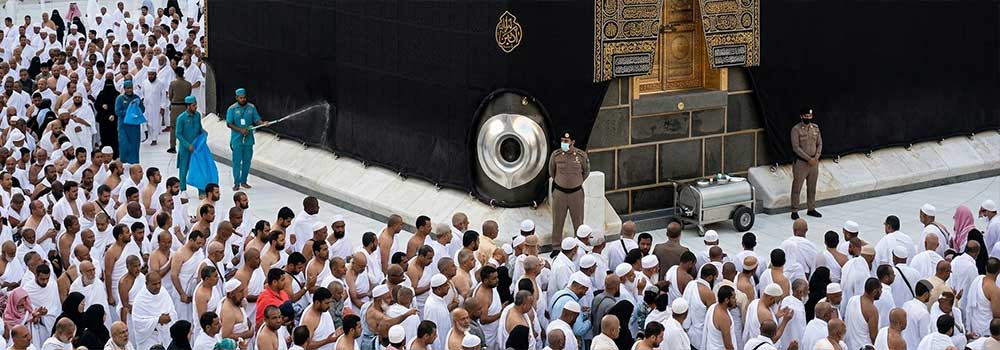
Tawaf is the first most important ritual of Umrah that pilgrims have to perform in Haram. It's an act of circumambulating around the Kaabah seven times in an anticlockwise direction.
Prerequisites of Tawaf
Similar to the other rituals of Umrah, Tawaf also requires to make a niyyah before starting. For example, you can revive in the heart that you are going to perform tawaf as part of an Umrah and can recite the following Dua's to further confirm your niyyah:
Arabic Text:
نَوَيْتُ أَنْ أُؤَدِّيَ طَوَافَ هَذَا الْبَيْتِ لِلَّهِ تَعَالَى
Transliteration: Nawaytu an uaddiya tawaafa haazal bayti lillahi ta'ala.
Translation: I intend to perform the Tawaf of this House for the sake of Allah, the Most High.
Arabic Text:
اللَّهُمَّ يَسِّرْ لِي هَذَا الطَّوَافَ، وَتَقَبَّلْهُ مِنِّي، وَاجْعَلْهُ خَالِصًا لِوَجْهِكَ الْكَرِيمِ
Transliteration: Allahumma yassir li haazat tawaaf wataqabbalhu minni waj'alhu khalisan li wajhikal kareem
Translation: O Allah, make this Tawaf easy for me, accept it from me, and make it purely for Your Noble sake.
Arabic Text:
اللَّهُمَّ تَقَبَّلْ مِنِّي طَوَافِي، وَاغْفِرْ لِي ذُنُوبِي، وَارْحَمْنِي بِرَحْمَتِكَ
Transliteration: Allahumma taqabbal minni tawaafi waghfir li zunoobi warhamni birahmatik.
Translation: O Allah, accept my Tawaf, forgive my sins, and have mercy on me through Your mercy.
Similarly, stopping the recitation of Talbiyah is important before even making the niyyah of Tawaf. Making Wudu is another important prerequisite of Tawaf; without it, Tawaf becomes invalid.
Performing Idtiba (Men Only)
For men, performing Idtiba is another Sunnah prerequisite to consider before starting Tawaf. Idtiba is an act in which male pilgrims have to place the upper ihram sheet (Rida) under the right arm and let it drape over the left shoulder. In short, it's an act of revealing the right shoulder and keeping it uncovered throughout the seven circuits of Tawaf.
Finding the Starting Point of Tawaf
Pilgrims have to perform tawaf in the Mataf area either on the ground or on the upper floors. In both cases, the starting point of Tawaf is the corner of Kaabah having Hajar al-Aswad (the black stone). As a pilgrim, you have to take the position exactly in the direction of Hajar al-Aswad to start every circuit of Tawaf. To guide pilgrims, there are also green vertical hangings in the direction of Hajar al-Aswad. So, find the green light and keep it on your right side to start your Tawaf.
Starting the first circuit of Tawaf
After locating the starting point of Tawaf, perform Istilam to begin the first circuit. Istilam is an act of saluting the Hajar al-Aswad that pilgrims can perform in three ways: by touching and kissing, by only touching or by raising the right hand pointing in the direction of Hajar al-Aswad. Either way, recite the following Dua while performing Istilam:
Dua for Performing Istilam
بِسْمِ اللّٰهِ وَاللّٰهُ أَكْبَرُ
Transliteration: Bismillahi Allahu Akbar.
Translation: In the name of Allah, Allah is the Greatest.
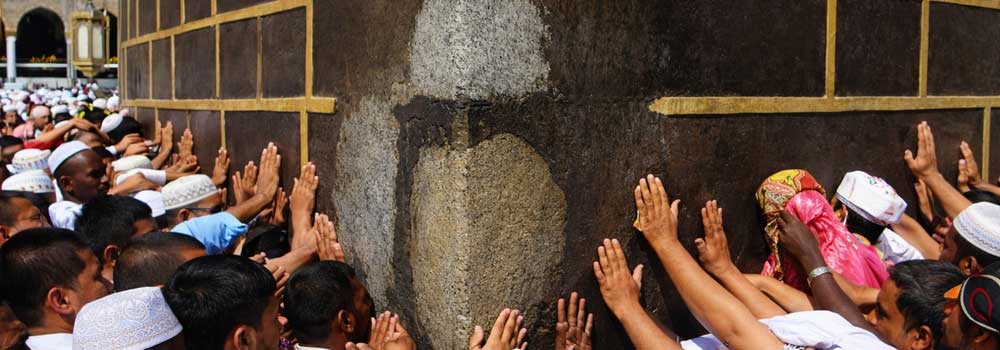
Nowadays, the surrounding of Kaabah remains crowded with pilgrims in which it's hard to get close to Hajar al-Aswad even to perform Istilam. In this case, it's not recommended to get into the crowd rather perform Istilam from a distance by just raising the right hand in its direction. After performing Istilam, start walking in an anticlockwise direction while keeping Kaabah on your left side.
Performing Ramal (Men Only — First 3 Circuits)
Ramal is a Sunnah act of walking quickly with short steps during the first three circuits of Tawaf. However, it's a Sunnah act only for men while women just have to walk normally throughout the seven circuits.
What to Recite During Tawaf
Remembering Allah from the heart is the sole purpose of Tawaf. So, there's nothing like a sunnah dhikar or Dua's to recite during tawaf. As a pilgrim, you can recite any of the Quranic or Sunnah Dua's while walking in Tawaf. In general, it's the best time to praise Allah for his greatness and oneness. Similarly, you can ask forgiveness, protection from hellfire, divine blessings and Jannah in your own words. Some of the easiest Dua's are listed here that you can choose if want to:
Recommended Duas to Recite During Tawaf
سُبْحَانَ اللّٰهِ
الْحَمْدُ لِلّٰهِ
اللّٰهُ أَكْبَرُ
لَا إِلٰهَ إِلَّا اللّٰهُ
سُبْحَانَ اللّٰهِ وَبِحَمْدِهِ
سُبْحَانَ اللّٰهِ الْعَظِيمِ
رَبِّ اغْفِرْ وَارْحَمْ
اللّٰهُمَّ اغْفِرْ لِي ذُنُوبِي
اللّٰهُمَّ اهْدِنِي وَارْزُقْنِي
Also, don't treat any Dua as a particular Sunnah to recite during any circuit of Tawaf. Only recite Dua's that you want to make from your heart and understand the meaning of each that Dua as well.
Dua at the Yemeni Corner (Rukn al-Yamani)
The Yemeni corner of the Kaabah holds great significance in terms of Tawaf. It's the corner closest to the corner of Hajar al-Aswad and comes before it in the southwestern direction. It's the corner during which the Holy Prophet used to recite the following Dua:
Dua Prophet ﷺ Recited at the Yemeni Corner
رَبَّنَا آتِنَا فِي الدُّنْيَا حَسَنَةً، وَفِي الْآخِرَةِ حَسَنَةً، وَقِنَا عَذَابَ النَّارِ
Transliteration: Rabbana aatina fid dunya hasanatan wa fil aakhirati hasanatan wa qina azaaban naar
Translation: Our Lord, grant us good in this world and good in the Hereafter, and save us from the punishment of the Fire.
Keep reciting this Dua between the Yemeni corner and the corner having Hajar al-Aswad.
Completing All Seven Circuits
The first circuit of Tawaf ends at the same entry point where it was started. So, perform a second Istilam to begin the second circuit of Tawaf and complete it the same way. Recite any Dua's or dhikar during walking and consider Dua of Rukn al-Yamani as well. In this way, pilgrims have to complete the seven circuits and end the Tawaf by performing the eighth Istilam.
Two Rak'ah Salah After Tawaf
It's Sunnah to offer two Rak'ah salah after completing Tawaf. For this, find a free place in the Mataf area or near Maqam e Ibrahim.
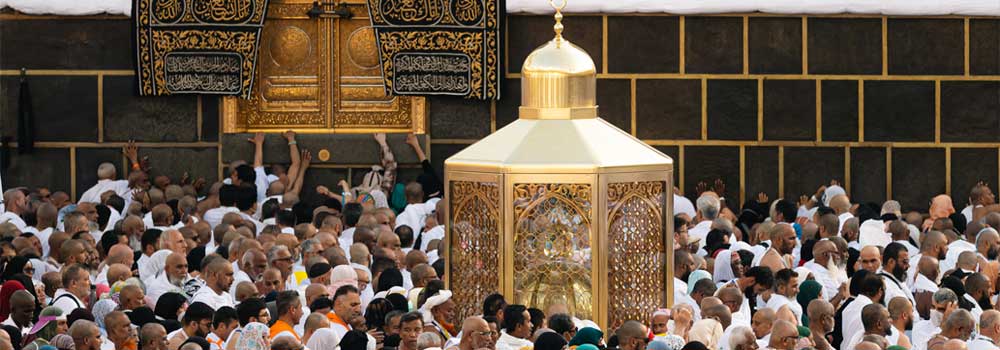
Offer this Salah in the same way as a regular Salah and recite Surah Al Kafirun in the first Rak'ah and Surah Al Ikhlas in the second Rak'ah. After that, make Dua and ask for acceptance of Tawaf.
Drinking Zamzam Water
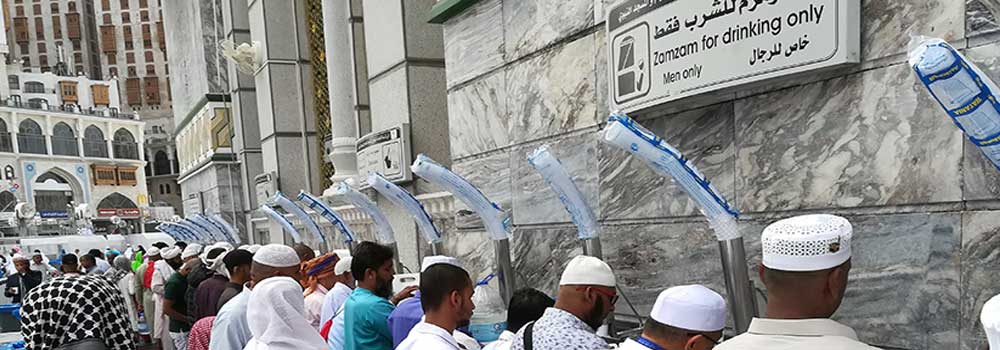
Zamzam is a miraculous water from the well in Masjid al-Haram. And it's Sunnah to drink Zamzam while performing Umrah rituals. Therefore, Zamzam stations are easily accessible everywhere in Haram. Since it comes from the divine source, drinking Zamzam offers great health and spirituality benefits.
Sunnah Dua to Recite While Drinking Zamzam Water
اللَّهُمَّ إِنِّي أَسْأَلُكَ عِلْمًا نَافِعًا، وَرِزْقًا وَاسِعًا، وَشِفَاءً مِنْ كُلِّ دَاءٍ
Transliteration: Allahumma inni asaluka ilman nafian, wa rizqan wasi'an, wa shifaan min kulli daa'.
Translation: O Allah, I ask You for beneficial knowledge, abundant provision, and healing from every illness.
The following is another Dua to ask for all of its benefits. This is because Allah grants the exact benefits of Zamzam that pilgrims make niyyah for. So, drink it until satisfied to regain energy for Sa'i while reciting this Dua:
Arabic Text:
اللَّهُمَّ اجْعَلْهُ لَنَا عِلْمًا وَإِيمَانًا، وَرِزْقًا وَشِفَاءً، وَقُوَّةً عَلَىٰ طَاعَتِكَ
Transliteration: Allahumma ijalhu lana ilman wa imanan, wa rizqan wa shifaan, wa quwwatan ala taatik.
Translation: O Allah, make it for us a source of knowledge and faith, provision and healing, and strength to obey You.
Dua for Strength in Dhikr, Gratitude and Worship
اللَّهُمَّ قَوِّنِي بِهِ عَلَىٰ ذِكْرِكَ وَشُكْرِكَ وَحُسْنِ عِبَادَتِكَ
Transliteration: Allahumma qawwinee bihi ala dhikrika wa shukrika wa husni ibadatik
Translation: O Allah, strengthen me through it to remember You, thank You, and worship You in the best manner.
Step 3 — Performing Sa'i Between Safa and Marwa
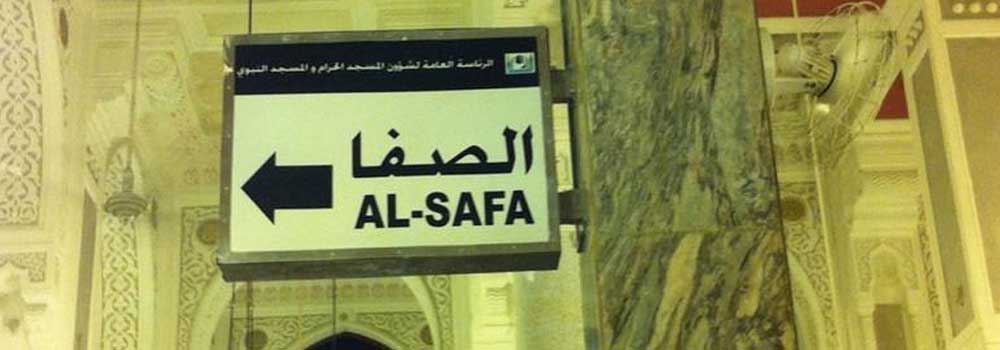
Sa'i is the second most important ritual of an Umrah that pilgrims perform in Haram. It's an act of completing seven laps between Safa and Marwa. Safa and Marwa are two sacred hills inside Masjid al-Haram in the Mas'a area. Mas'a area is a gallery area that spreads into multiple storeys in any of which pilgrims can perform Sa'i.
Starting at Safa Hill — Dua and Intention
Locate any of the Mas'a area floors and get to the Safa hill. And Safa hill is the starting point of Sa'i at which you have to to start the first lap of Sa'i while reciting this Sunnah Dua:
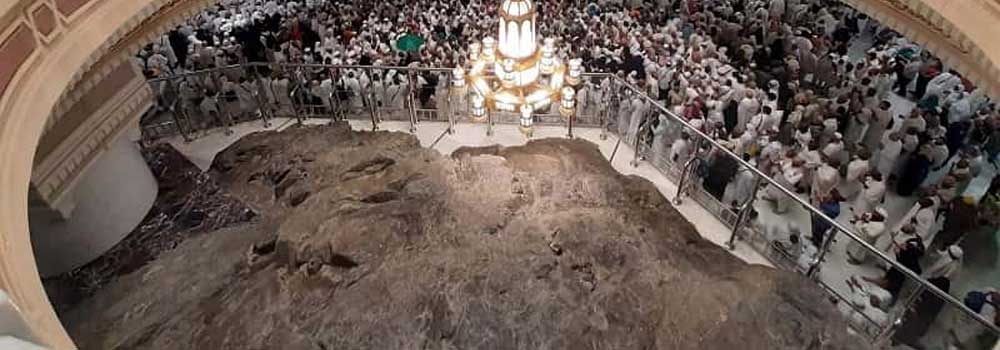
Opening Ayah to Recite Upon Reaching Safa Hill
إِنَّ الصَّفَا وَالْمَرْوَةَ مِن شَعَائِرِ اللَّهِ
Transliteration: Innaa-safs wal-Marwata min sha‘a’irillah.
Translation: Indeed, Safa and Marwa are among the symbols of Allah.
Sunnah Dua of Intention Before Starting Sa'i
نَبْدَأُ بِمَا بَدَأَ اللَّهُ بِهِ
Transliteration: Nabda’u bima bada’Allahu bihi.
Translation: We begin with what Allah began with.
Main Dua to Recite on Safa Hill
اللَّهُ أَكْبَرُ، اللَّهُ أَكْبَرُ، اللَّهُ أَكْبَرُ لَا إِلٰهَ إِلَّا اللَّهُ وَحْدَهُ لَا شَرِيكَ لَهُ لَهُ الْمُلْكُ وَلَهُ الْحَمْدُ وَهُوَ عَلَىٰ كُلِّ شَيْءٍ قَدِيرٌ لَا إِلٰهَ إِلَّا اللَّهُ وَحْدَهُ أَنْجَزَ وَعْدَهُ وَنَصَرَ عَبْدَهُ
وَهَزَمَ الْأَحْزَابَ وَحْدَهُ
Transliteration: Allahu Akbar, Allahu Akbar, Allahu Akbar
La ilaha illa-Allahu wahdahu la sharika lah
Lahul-mulku wa lahul-hamd
Wa huwa ‘ala kulli shay’in qadir
La ilaha illa-Allahu wahdah
Anjaza wa‘dah
Wa nasara ‘abdah
Wa hazamal-ahzaba wahdah.
Translation: Allah is the Greatest, Allah is the Greatest, Allah is the Greatest. There is no god but Allah alone, with no partner. His is the kingdom and all praise. He has power over everything. There is no god but Allah alone.
He fulfilled His promise, helped His servant, and defeated the enemies alone.
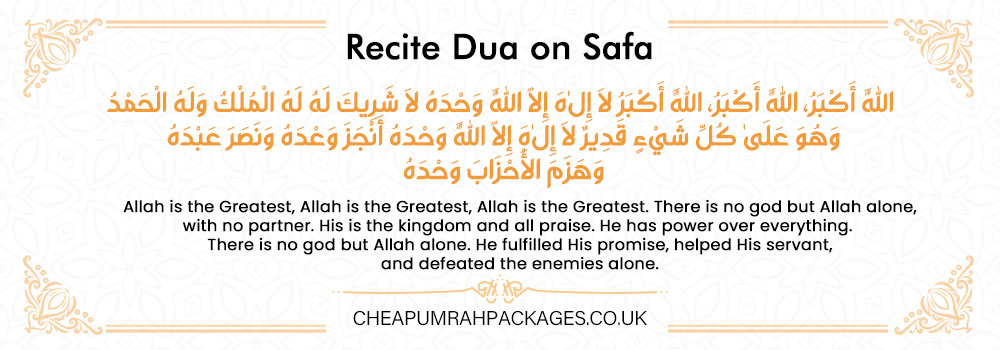
Walking from Safa to Marwa
With this, start walking from Safa to Marwa while doing dhikar or reciting Sunnah Dua's similarly as you did during Tawaf. Recommended Duas to Recite While Walking from Safa to Marwa.
Arabic Text:
رَبِّ اغْفِرْ وَارْحَمْ إِنَّكَ أَنتَ الْأَعَزُّ الْأَكْرَمُ
Transliteration: Rabbi-ghfir warham innaka antal-A‘azzul-Akram.
Translation: My Lord, forgive and have mercy. You are the Most Mighty, Most Generous.
Arabic Text:
اللَّهُمَّ اغْفِرْ لِي وَارْحَمْنِي وَاهْدِنِي
Transliteration: Allahumma-ghfir li warhamni wahdini.
Translation: O Allah, forgive me, have mercy on me, and guide me.
Arabic Text:
اللَّهُمَّ يَسِّرْ لِي أُمُورِي
Transliteration: Allahumma yassir li umuri.
Translation: O Allah, make my matters easy.
Performing Ramal Under the Green Lights (Men Only)
Similar to Tawaf, men also have to perform Ramal during Sa'i but only under the green light area. There is a green light area between Safa and Marwah hills, under which men have to walk quickly, while women just have to keep walking normally.

Completing All Seven Laps
The first lap of Sa'i ends at Marwah at which you can pause for a while and make Dua.
The second lap of Sa'i starts at Marwah and gets completed at Safa. So, keep walking from Safa to Marwah and from Marwah to Safa the same way as you started. Also, keep doing dhikar or making Dua while walking.
- Laps 1, 3, 5, 7 → Safa to Marwa.
- Laps 2, 4, 6 → Marwa to Safa.
- The seventh and final lap ends at Marwa.
Completing Sa'i
Similar to the first laps of Sa'i, complete the remaining laps the same way. And thus, the seventh lap will end at Marwah hill at which you have to stop and make a way out of Mas'a area.

Also, make Dua for acceptance but you don't have to offer two Rak'ah salah after completing Sa'i. Also, Sa'i doesn't require pilgrims to be in the state of purity unlike Tawaf.
Step 4 — Halq or Taqsir: Completing Your Umrah
Halq or Taqsir is the final step of an Umrah that every pilgrim should understand as part of how to perform Umrah step by step. Both Halq or Taqsir refers to an act of cutting hair as a final Umrah ritual to complete the Umrah and exit the Ihram as well.
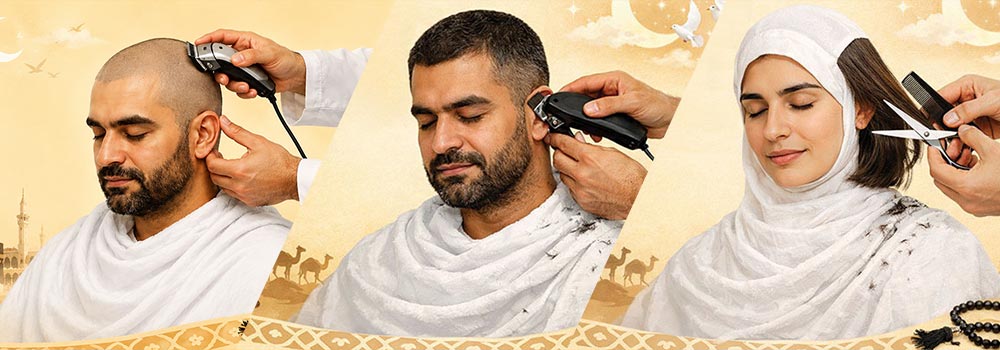
However, there are different rules for Halq or Taqsir for men and women that you need to understand as follows.
Halq for Men (Recommended)
Halq is an act of shaving the entire head as part of an Umrah ritual. It's a recommended act for men only and the Holy Prophet also used to recommend Halq for men pilgrims. In this case, male pilgrims have to shave the entire head, not any part of the head.
Taqsir for men (Alternative)
Taqsir is an act of trimming hair from the entire head for men. It's not a recommended act but an option for men who can't consider Halq for any medical or physical condition. In this case, men have to shorten their hair from the entire head, not from any of the parts.
Taqsir for Women
Taqsir is an act of shortening hair from the ends for women and it's the only option for women to exit the Ihram state. Women can't perform Halq as a final ritual. For this, women have to gather the ends of hair and cut up to the length of a fingertip. For women, it's also important to cut the hair in private or inside the Haram or in front of non Mahram.
Visiting Madinah: Masjid al-Nabawi, Rawdah and Ziyarat places
The complete Umrah itinerary also includes a visit to Madinah. Visiting Madinah allows pilgrims to offer prayers in Masjid an-nabawi and send Salawat upon the Holy Prophet. That's why, Cheap Umrah Packages also provides pre-planned Umrah itinerary to UK Muslims including enough days to spend in Madinah as well. During this visit, pilgrims can plan ziyarat tours to the sacred sites of Madinah.
For example, Jannat al-Baqih, Masjid Quba, Mount Uhud, Masjid al-Qiblatayn and Sab'a Masajid are significant Ziyarat places of Madinah. In addition, visiting the Rawdah of the Holy Prophet and sending Salam to him is also a rewarding act for pilgrims. As a pilgrim, you can plan ziyarat tours either independently or with our transport providers to enhance the experience.
How to Perform a Second Umrah
Pilgrims who visit Madinah during their Umrah journey can easily perform Second Umrah. For this, pilgrims have to enter the Ihram state at Dhul Hulayfah in Madinah and travel back to Makkah to perform all the Umrah rituals in the same way as the first Umrah. This is the reason Cheap Umrah Packages offers all the standard Umrah deals with Makkah and Madinah itinerary as part of an Umrah journey.
And since performing single Umrah in one journey to Makkah is the Sunnah act of our Holy Prophet. So, it's evident that performing multiple Umrah by entering Ihram from Aisha Mosque is nothing but an innovation in Islam. Anyone who wants to perform the second Umrah must enter Ihram from any of the five designated Miqat locations among which Dhul Hulayfah is the one for pilgrims traveling from Madinah. This way, your journey back from Madinah will count as the second journey to Makkah in which you can perform a second Umrah exactly according to the Sunnah.
Common Mistakes to Avoid During Umrah
Though Umrah involves fewer rituals than Hajj, many pilgrims still make mistakes during Umrah due to the lack of proper understanding and knowledge. Especially first-time pilgrims don't have any idea about the seriousness of such mistakes that can affect their pilgrimage quality. Therefore, every pilgrim should avoid these common mistakes during Umrah to maximize the spirituality of the journey:
- Entering Ihram without making niyyah for Umrah.
- Crossing Miqat location during Umrah flight without entering Ihram.
- Covering the head in the state of Ihram (for men).
- Using scented products during Ihram.
- Engaging in arguments or fights in Ihram.
- Covering the face during Ihram (for women).
- Not making Tawaf before starting Tawaf.
- Pushing fellow pilgrims in Haram area.
- Trying to get closer to Hajar al-Aswad in the crowd.
- Specifying certain Dua's for each circuit of Tawaf.
- Not counting the circuits of Tawaf properly.
- Counting Tawaf rounds incorrectly.
- Running during Sa'i under green lights (for women).
- Delaying Halq or Taqsir for a long time after completing Sa'i.
- Cutting or shaving only part of the head (for men).
- Performing multiple Umrah by entering Ihram from Masjid Aisha.
- Using mobile unnecessarily during Umrah.
Best Time to Perform Umrah from the UK
Winter months are the best times to plan an Umrah journey for almost all the UK citizens. These months such as November, December, January and February feature mild weather conditions in Makkah and Madinah that British pilgrims can easily tolerate. And pilgrims can also make the prices of Umrah packages 2026 from the UK affordable during winter by booking early.
However, this time period can't be the perfect time for performing an Umrah for every UK citizen. For example, Ramadan is the best time to perform an Umrah for pilgrims who want to maximize their reward. Similarly, post-hajj days are perfect for UK pilgrims who want to avoid the crowd of pilgrims. And pilgrims who want to perform Umrah with family members can perform Umrah during December holidays.
In short, the best time to perform an Umrah is entirely an individual choice that pilgrims have to find out based on their budget and travel needs. If it doesn't work for you, reach us to get complete guidance and let Cheap Umrah Packages lead you as a trusted travel partner from your hometown UK.
Final Words
In conclusion, an Umrah involves four important rituals from Ihram, Tawaf and Sa'i to Halq or Taqsir. And knowing the Sunnah way to perform each ritual is all what makes a difference and determines the reward of the journey. Therefore, pilgrims who are going to perform Umrah for the first time should understand the basics of Umrah rituals to avoid mistakes. And if you're feeling lost anywhere, no need to worry. Just reach out Cheap Umrah Packages to address your concerns and get complete guidance of the journey step by step. Cheap Umrah Packages is a leading travel agency in the UK that not just handle the whole booking process on your behalf but also guide you about all the Umrah rituals in one place.
FAQ about Umrah Guide
Umrah flights from the UK used to pass the Miqat of Yalamlam or Qarn al-Manazil based on the route. However, all the pilgrims traveling from the UK have to wear Ihram garments at the airport before boarding an Umrah flight and make niyyah in the plane since they have to cross Miqat in the air.
Halq is an act of shaving the head completely while Taqsir is an act of trimming hair from the entire head. Men can perform Halq or Taqsir yet Halq is more preferable in Islam. However, women only have to perform Taqsir and cut hair ends up to the length of a fingertip.
No. Wudhu is not a compulsory prerequisite of Sa'i. Even if your wudhu breaks during Sa'i, the entire Umrah remains valid. However, it's recommended to be in the state of wudhu throughout the Umrah rituals.
Yes. You can perform Tawaf on behalf of someone who is permanently disable to travel anyway. Similarly, pilgrims can perform Tawaf on behalf of deceased loved ones as a rewarding act.
There are no fixed Dua's to recite during each circuit of Tawaf. Therefore, you can recite any Quranic or Sunnah Dua during Tawaf to remember Allah and ask for blessings. The sincerity and focus is all what's needed during Tawaf.
Zamzam is a miraculous water from the well in Masjid al-Haram. Drinking zamzam water during Umrah is a Sunnah of our Holy Prophet and also brings benefits of health and spirituality. Every pilgrim can bring a 5-liter zamzam bottle back to the UK as a souvenir for loved ones.
Nusuk is an official Umrah application helpful for pilgrims from all over the world. Every pilgrim needs a Nusuk application to get Rawdah permits in 2026. Besides this, Cheap Umrah Packages handles everything else on your behalf so you don't even need Nusuk for another Umrah service.
No. A woman in menstruation cannot perform Tawaf until she becomes pure. She can only continue to Tawaf, Sa'i and Taqsir after performing ghusl.
Performing an Umrah during Ramadan is a highly rewarding act as compared to another time of a year. For example, the reward of Umrah in Ramadan is equal to the reward of Hajj. Moreover, performing voluntary Tawaf and offering Taraweeh while fasting in Haram further enhances this reward.